Who Pays for Fallen Tree Damage?
Table of Contents
- Introduction
- Understanding the Problem
- How Emergency Tree Removal Helps
- Benefits of Understanding Fallen Tree Liability
- Related Insights and Resources
- Common Mistakes to Avoid
- When Should You Speak With a Professional?
- Conclusion
- Frequently Asked Questions
Key Takeaways
- Who pays for fallen tree damage usually depends on factors like which property the tree fell on and whether it was healthy beforehand.
- In many cases, the property owner where the damage occurred files a claim with their own homeowner's insurance.
- Who is responsible for fallen tree damage can shift if negligence is involved, such as ignoring a known hazardous tree.
- An emergency tree removal service is often needed quickly after a tree falls, separate from the insurance process.
- Documenting the damage and tree condition can help support an insurance claim, regardless of who is ultimately responsible.
Introduction
Who pays for fallen tree damage usually depends on factors like which property the tree was on, whether it was healthy, and the homeowner's insurance policies involved, though in most cases, the property owner where the damage occurred files a claim with their own insurer. If a tree has already come down, an emergency tree removal service can help address the immediate situation safely.
Knowing the best time of year for tree removal can also help prevent these situations before they happen.
Storms, age, and disease can all cause a tree to come down with little warning, and when it lands on a fence, roof, or vehicle, the question of who is responsible for fallen tree damage often follows close behind. This article looks at how that question is generally approached, and what property owners can expect.
Understanding the Problem
Common Customer Concerns
After a tree falls, property owners often have similar questions:
- "The tree was on our neighbor's property, but it fell on ours. Who pays for this?"
- "Does it matter whether the tree looked healthy before it fell?"
- "Will our insurance cover this, or will it be denied?"
- "Do we need an emergency tree removal service right away, or can it wait?"
- "What if the damage is to a shared fence or boundary line?"
How Responsibility Is Typically Determined
A few factors commonly come into play when figuring out who is responsible for fallen tree damage:
- Where the tree was rooted. Generally, the property owner where the tree was rooted may have some responsibility, particularly if there were known issues with the tree.
- The tree's condition beforehand. A healthy tree that falls during a severe storm is often treated differently than a tree that was visibly dead, diseased, or previously flagged as hazardous.
- Negligence. If a property owner was aware of a hazardous tree and did not address it, this can affect who pays for fallen tree damage.
- Insurance coverage. In many cases, the property owner where the damage occurred files a claim with their own homeowner's insurance, regardless of where the tree was rooted.
- Local regulations. Some situations may also involve local rules about tree maintenance and property boundaries.
Why It Matters
Fallen tree damage can range from a cracked fence panel to significant structural damage on a home or vehicle. Understanding how responsibility is typically determined, and how insurance usually fits into the picture, can help property owners know what to expect and avoid unnecessary disputes with neighbors or insurers.
How Tree Removal Helps
The Process
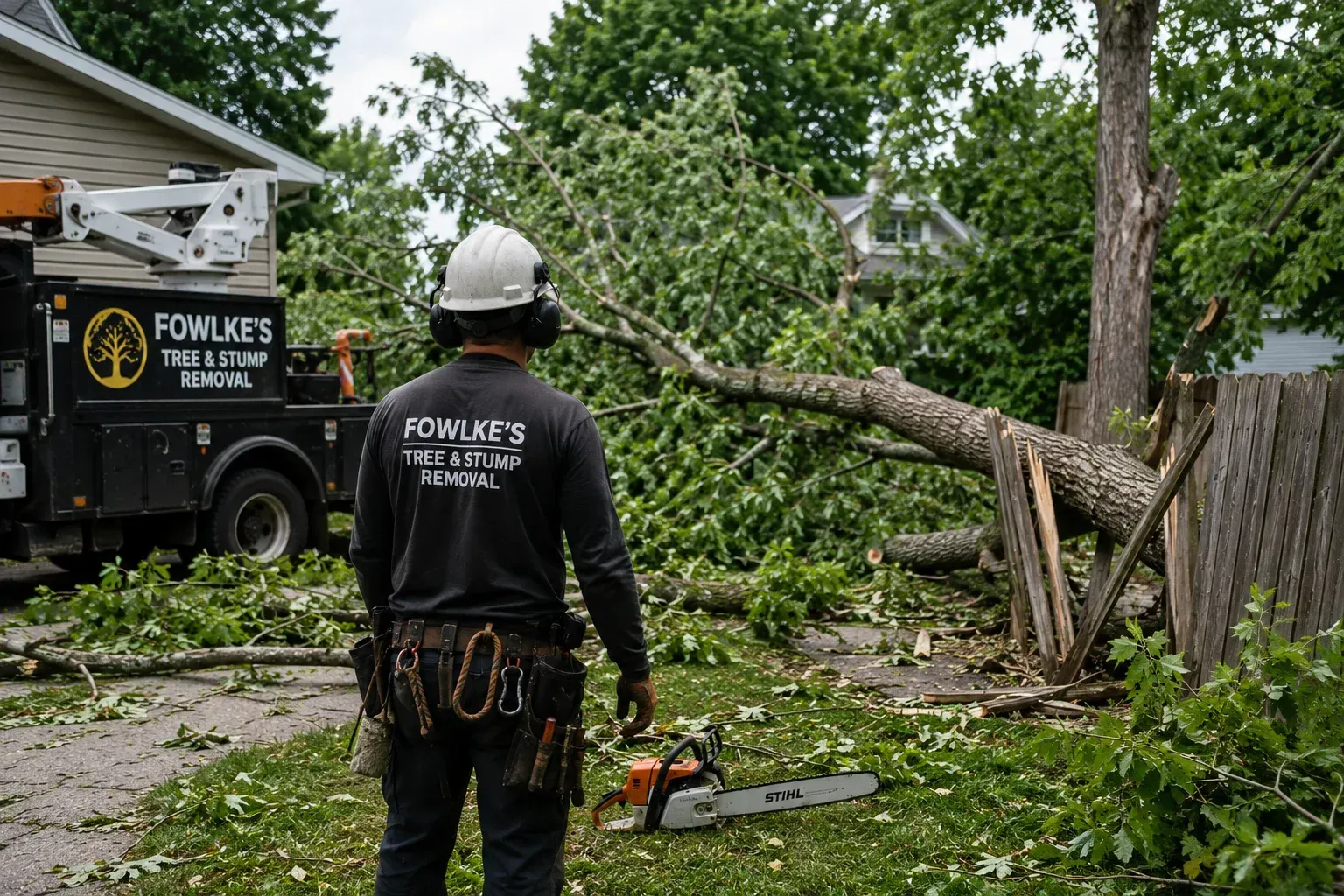
When a tree falls, an emergency tree removal service typically follows a process like this:
- Initial safety assessment, checking for hazards like downed power lines, unstable limbs, or further risk to structures.
- Stabilizing the situation, which may involve temporary measures to prevent further damage.
- Removing the tree, often in sections depending on size and location.
- Clearing debris, so the area is safe and accessible while insurance or repair processes move forward.
Approach and Key Considerations
Emergency tree removal is generally treated separately from the question of who pays for fallen tree damage. The priority is addressing the immediate safety concern, while insurance and liability discussions typically happen afterward.
Documentation Matters
Taking photos of the fallen tree, the damage, and the surrounding area before cleanup begins can be helpful for insurance purposes. This documentation can support a claim regardless of who is ultimately responsible for fallen tree damage.
Benefits of Understanding Fallen Tree Liability
Clearer Expectations
Knowing roughly how who pays for fallen tree damage is typically determined can help reduce confusion or frustration after an already stressful event.
Smoother Insurance Conversations
Understanding that, in many cases, your own homeowner's insurance is the starting point can make initial conversations with your insurer more straightforward.
Reduced Conflict With Neighbors
When a fallen tree affects a shared boundary or neighboring property, having a general understanding of how responsibility is usually approached can help keep conversations calmer and more productive.
Faster Response When It Matters
Knowing that an emergency tree removal service can be called regardless of the liability question means safety does not have to wait on insurance discussions.
Better Preparedness
Understanding these factors ahead of time, before a tree ever falls, can help property owners know what steps to take if it happens.
Related Insights and Resources
Many fallen tree situations could have been avoided, or at least made less likely, with earlier attention. Our article on the best time of year for tree removal covers seasonal considerations for addressing a tree before it becomes a hazard.
Tips for Reducing Future Risk
- Have trees near structures or property lines assessed periodically, especially older or larger trees.
- Address visible signs of decay, leaning, or dead limbs sooner rather than later.
- Keep records of any tree assessments or maintenance, as this can be useful if a dispute arises later.
- After a storm, check trees on your property for new damage, even if nothing has fallen yet.
Common Misconceptions
A common misconception is that the property owner whose tree fell is automatically responsible for all damage. In reality, this depends on factors like the tree's condition and whether there was prior negligence. Another misconception is that nothing can be done until an insurance adjuster arrives. In most cases, an emergency tree removal service can address immediate safety concerns right away, with documentation supporting the claims process afterward.
Common Mistakes to Avoid
- Assuming the neighbor automatically pays. Responsibility often depends on more than just where the tree was rooted.
- Delaying cleanup due to liability questions. Safety concerns generally should not wait on these discussions.
- Not documenting the scene. Photos taken before cleanup can be valuable for insurance purposes.
- Ignoring previously flagged hazardous trees. This can affect who is responsible for fallen tree damage if the tree later causes harm.
- Not contacting your own insurer first. In many cases, this is the appropriate starting point regardless of where the tree was rooted.
When Should You Speak With a Professional?
It may be worth speaking with a professional if:
- A tree has fallen and you need an emergency tree removal service to address immediate safety concerns.
- You are unsure how to document the damage for insurance purposes.
- A dispute has come up with a neighbor about who pays for fallen tree damage.
- You have a tree that has not fallen yet, but shows signs of being hazardous.
- You want general guidance on how these situations are typically handled before one occurs.
A conversation with a tree care professional can address the immediate situation, while questions about liability and insurance are generally best discussed with your insurance provider as well.
Conclusion
Who pays for fallen tree damage generally comes down to a combination of factors, including where the tree was rooted, its condition beforehand, and whether negligence played a role, with most claims starting through the property owner's own homeowner's insurance. Who is responsible for fallen tree damage is not always a simple answer, but understanding the general approach can help property owners respond more confidently. Regardless of how liability is sorted out, an emergency tree removal service can address the immediate safety concerns right away.
Need Professional Tree Removal Advice?
If a tree has fallen on your property and you need it addressed quickly, our team is available to help with emergency tree removal service, while you sort out the insurance and liability side of things separately. Reach out via email at fowlkestreeandstumpremoval@gmail.com or call (319) 327-1199.
Frequently Asked Questions
If a neighbor's tree falls on our property, who pays for fallen tree damage?
In many cases, we would file a claim with our own homeowner's insurance first, though the tree's condition and any prior negligence can also be factors.
Do we need to wait for an insurance adjuster before removing a fallen tree?
No, an emergency tree removal service can address immediate safety concerns, and documentation can support the insurance process afterward.
Does it matter if the tree was already dead or damaged before it fell?
Yes, this can affect who is responsible for fallen tree damage, particularly if the condition was previously known.
What should we document after a tree falls on our property?
Photos of the tree, the damage, and the surrounding area before cleanup can be helpful for our insurance claim.
Can we get help with a hazardous tree before it falls?
Yes, having a tree assessed before it becomes a problem can help us avoid dealing with fallen tree damage altogether.
Related Posts